







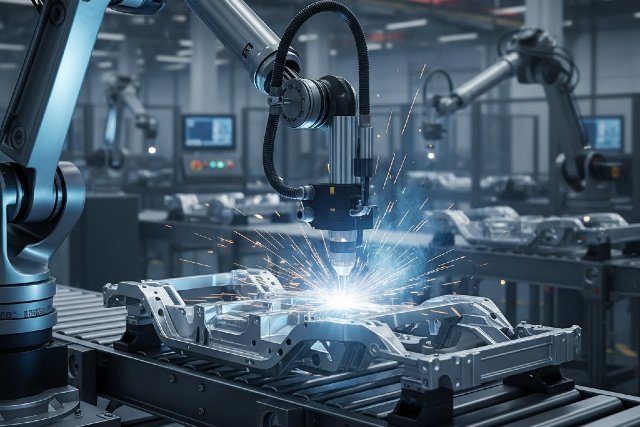
Introduction to Laser Welding Machine
Imagine a world where welding is not just about heat and sparks but precision and speed. Enter the laser welding machine — a game-changer in the manufacturing landscape. This innovative technology has rapidly gained traction among industries looking for efficiency without compromising quality. With its ability to deliver high-speed, high-accuracy welds, it’s no surprise that more companies are embracing this advanced method. As we delve deeper into what makes laser welding machines stand out, you’ll discover how they’re transforming traditional practices and shaping the future of fabrication across various sectors. Prepare to explore a realm where innovation meets reliability!
Advantages of Laser Welding Over Traditional Welding Methods
Laser welding machines offer remarkable precision that traditional methods often struggle to achieve. This high accuracy minimizes the heat-affected zone, reducing the risk of warping or distortion in materials.
Speed is another significant advantage. Laser welding can complete tasks much faster than conventional techniques, which boosts productivity and efficiency in manufacturing processes.
Additionally, laser welding produces cleaner welds with minimal slag and spatter. This results in less post-weld cleanup and a more polished final product.
Another noteworthy benefit is versatility. Laser systems can work on various materials — metals, plastics, and even ceramics — making them suitable for diverse applications across industries.
The automation capabilities of laser welding enhance safety by keeping operators at a distance from hazardous processes while maintaining consistent quality throughout production runs.
Types of Laser Welding Machines
Laser welding machines come in various types to cater to different industrial needs. Each type offers unique features that enhance precision and efficiency.
One common variety is the solid-state laser welding machine. It uses diodes as a light source, providing durability and high output with minimal maintenance requirements.
Another popular option is the fiber laser welding machine. Known for its flexibility and speed, it delivers impressive performance across numerous materials, making it ideal for diverse applications.
CO2 laser welding machines are also prevalent. They emit a focused beam of light through carbon dioxide gas, excelling in thicker material welds due to their higher power levels.
There’s the disk laser system. This advanced technology combines multiple fibers into one beam for exceptional accuracy and energy savings during high-speed operations.
Choosing the right type depends on specific project requirements and desired weld quality.
How Does a Laser Welding Machine Work?
A laser welding machine operates using focused beams of light. These lasers deliver high energy at precise points, melting the material to create a strong bond.
The process begins with the selection of an appropriate laser type. Common options include fiber lasers and CO2 lasers, each suited for specific materials and thicknesses.
Once activated, the laser beam is directed onto the workpiece through optics. This setup ensures minimal heat diffusion outside the targeted area, which reduces distortion and maintains accuracy.
As the metal reaches its melting point, it flows into a pool that solidifies upon cooling. The result is a clean weld with excellent strength characteristics.
Laser welding machines often utilize automation for enhanced efficiency. This makes them ideal for mass production settings where speed and precision are crucial.
Applications of Laser Welding in Different Industries
Laser welding finds diverse applications across various industries, showcasing its versatility and efficiency. In the automotive sector, it plays a pivotal role in assembling lightweight components that enhance fuel efficiency without compromising strength.
The aerospace industry also benefits significantly from laser technology. It provides precise welds for critical parts where safety is paramount. The ability to maintain structural integrity while reducing weight is invaluable here.
Medical devices are another field benefiting from this advanced technique. Laser welding ensures clean and reliable joints in complex instruments, which can be crucial for patient safety.
Electronics manufacturing employs laser welding for securing micro-components with precision. This method minimizes thermal damage, ensuring product longevity and performance.
The jewelry industry utilizes laser welding to create intricate designs that were previously difficult to achieve with traditional methods. Each application highlights how lasers are shaping modern manufacturing processes across sectors.
Factors to Consider When Choosing a Laser Welding Machine
When selecting a laser welding machine, consider the power output. Higher wattage typically leads to faster processing and the ability to handle thicker materials.
Next, focus on the type of laser technology utilized. Fiber lasers are known for their efficiency and precision, while CO2 lasers excel in cutting metal with intricate designs.
Another critical factor is the size and portability of the machine. If you have limited space or require mobility for various projects, opt for a more compact model.
Also, evaluate compatibility with different materials. Some machines work better with specific metals like aluminum or stainless steel.
Don’t ignore software integration capabilities either. User-friendly interfaces can significantly simplify operation and enhance productivity through advanced programming options.
Consider after-sales support from manufacturers. Access to timely repairs and maintenance services can ensure your operations run smoothly over time.
Maintenance and Care for a Laser Welding Machine
Maintaining a laser welding machine is crucial for optimal performance. Regular inspections are key. Check the optics frequently to ensure they remain clean and free from debris.
Cooling systems require attention too. Keeping coolant levels stable prevents overheating, which can damage components over time.
Calibration should be done periodically to maintain precision in your welds. A small misalignment can lead to significant issues during production.
Dust and contaminants in the workspace pose risks as well. Use proper filtration systems to keep the environment clean and reduce wear on the machine.
Follow manufacturer guidelines for maintenance schedules and operational practices. Adhering to these recommendations will extend the lifespan of your equipment significantly while ensuring high-quality results every time you weld.
The Future of Laser Welding Technology
The future of laser welding technology is brimming with innovation. As industries demand higher efficiency and precision, advancements are on the horizon.
One exciting trend is the integration of artificial intelligence. AI can optimize processes in real-time, ensuring seamless operation and enhanced accuracy. This shift can drastically reduce production times.
Moreover, portable laser welding machines are gaining traction. These compact units offer flexibility for varied applications, from automotive to aerospace settings.
As materials science progresses, new alloys and composites will become compatible with laser welding techniques. This expansion opens doors for more complex projects that were previously challenging to execute.
Sustainability also plays a role in this evolution. Eco-friendly practices are being woven into manufacturing processes, making laser technology a greener choice compared to traditional methods.
With these developments on the rise, it’s clear that laser welding will continue to shape modern manufacturing landscapes significantly.
Conclusion
As industries continue to evolve, the demand for precision and speed in welding processes becomes ever more critical. The laser welding machine stands out as a game-changer in this landscape. Its ability to provide high-speed, high-accuracy welds makes it an invaluable tool across various sectors.
With advancements in technology and increasing adoption rates, laser welding is set to become even more prominent. Businesses that invest in these machines can expect improved productivity and quality of work. Whether you’re operating within automotive manufacturing or electronics assembly, embracing laser welding could be the key to staying ahead of the competition.
Investing in a reliable laser welding machine not only enhances operational efficiency but also positions your business for future success. Adapting to modern technologies will pave the way forward as industries navigate new challenges and opportunities alike.