







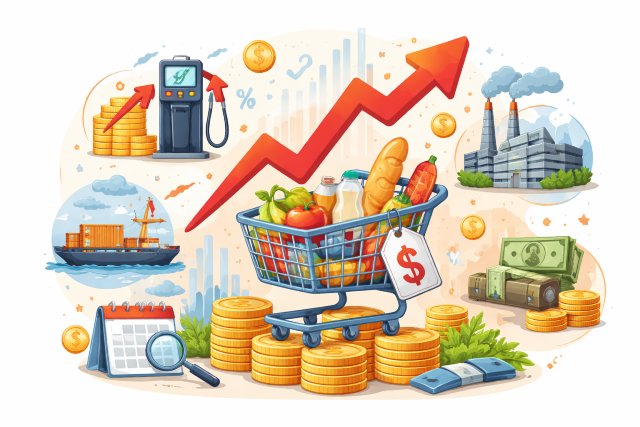
Inflation is one of those economic terms that sounds technical — until it hits your grocery bill, rent, electricity, and fuel. If it feels like prices are climbing faster than your income, you’re not imagining it. Inflation is the broad rise in prices across an economy, meaning your money buys less than it did before.
What makes inflation especially frustrating is that it doesn’t come from just one place. In reality, inflation often builds from several forces happening at the same time: energy shocks, supply constraints, wage pressures, housing shortages, and policy changes, among others. Global data and major institutions like the IMF, OECD, and World Bank consistently show that inflation tends to spike when supply can’t keep up with demand — especially after big disruptions like wars, pandemics, or commodity shocks.
What Is Inflation?
Inflation is the sustained increase in the general level of prices of goods and services over time. When inflation rises, each unit of currency buys fewer goods and services — reducing purchasing power.
Economists usually measure inflation using the Consumer Price Index (CPI), which tracks price changes in a “basket” of everyday items like food, housing, transportation, and healthcare.
Why it matters:
Even low inflation compounds over time. If inflation averages 3% annually, prices rise about 34% over ten years — meaning what costs $100 today could cost about $134 later, even without a crisis.
Why Inflation Happens: The Big Picture
Inflation is best understood as the result of pressure on prices — either because:
- Demand increases faster than supply, or
- Supply becomes more expensive or constrained, or
- Expectations change, leading businesses and workers to raise prices and wages in anticipation.
The most persistent inflation usually happens when multiple forces overlap — like a supply shock plus strong demand plus higher wages.
The IMF has noted that global inflation surges often come from broad global factors (especially energy and food), not just local issues.
Top Reasons Prices Keep Increasing
1) Energy Prices: The “Hidden Inflation Engine”
Energy is one of the most powerful drivers of inflation because it affects nearly everything: transportation, manufacturing, packaging, farming, and home utilities.
When energy prices rise, companies face higher operating costs — and those costs get passed into consumer prices.
Research from the IMF highlights how energy price shocks can ripple through the entire economy, influencing overall inflation far beyond just gasoline or electricity.
Real-world example:
Even if you don’t drive, higher diesel prices raise the cost of shipping food to supermarkets. That shows up as higher grocery prices.
2) Supply Chain Disruptions and “Supply Constraints”
If supply can’t keep up with demand, prices rise. This happens when production slows due to:
- shortages of raw materials
- factory slowdowns
- shipping delays
- bottlenecks in key industries (chips, fertilizer, energy)
Even in 2025, supply constraints remain a major cause of inflation in certain categories and regions.
An IMF Economic Review study explains that supply constraints amplify inflation, especially when demand rises quickly but production cannot scale up.
Why this matters:
When supply is tight, businesses gain pricing power — because customers have fewer alternatives.
3) Food Inflation: Climate, Conflict, and Input Costs
Food is highly sensitive to inflation because it depends on multiple volatile inputs:
- fertilizer
- fuel
- labor
- weather stability
- transport logistics
- trade routes
The World Bank has shown that food inflation in recent years has often been driven by cost factors and energy prices, as well as trade disruptions connected to geopolitical events.
Key insight:
Food inflation is rarely just “farm supply.” It’s often energy inflation wearing a different mask.
4) Housing Costs: Rent, Mortgages, and Supply Shortages
Housing inflation deserves special attention because it affects nearly everyone, and it tends to be “sticky.”
Housing prices rise when:
- building costs increase
- interest rates change
- rental supply is tight
- population grows faster than new construction
In many countries, rent inflation remains one of the most persistent components of CPI — even when other categories cool.
Why it lasts longer:
Housing markets adjust slowly. Construction takes time, and rental contracts reset gradually.
5) Wage Growth and Services Inflation
A lot of inflation discussion focuses on goods (food, fuel, cars). But in advanced economies, services make up a huge share of consumer spending: healthcare, education, insurance, restaurants, transport services.
Services inflation often rises when wages rise — because labor is the main input. The European Central Bank has highlighted the relationship between wages and non-rent services inflation in advanced economies, showing how wage pressures can feed into persistent inflation.
Important nuance:
Wage growth is not “bad.” In fact, wages rising can help workers keep up with inflation. But if wage growth outpaces productivity growth, companies often raise prices to protect margins.
6) Corporate Pricing Power (“Greedflation” Debate)
One of the most debated causes of inflation is whether corporations raise prices beyond what their costs justify.
The reality is nuanced:
- In competitive markets, firms can’t raise prices too far without losing customers.
- In concentrated markets (few major players), price increases may “stick” because consumers have limited choices.
- During periods of high inflation, consumers expect price increases, and businesses may test higher pricing.
Even mainstream institutions emphasize that inflation can be reinforced when expectations shift and price-setting behavior changes, particularly after major shocks.
Practical takeaway:
When people accept higher prices as normal, businesses face less resistance to increasing them.
7) Government Spending, Stimulus, and Demand Surges
When governments inject money into an economy — through stimulus checks, subsidies, or large spending programs — demand rises.
That’s not automatically inflationary. It depends on whether supply can expand to meet the demand.
The IMF Economic Review paper cited earlier emphasizes that fiscal stimulus becomes much more inflationary when supply constraints exist.
This is why two countries can spend similar amounts but see different inflation outcomes: the difference is often supply flexibility.
8) Interest Rates: The Inflation vs. Growth Trade-Off
Central banks raise interest rates to fight inflation by reducing borrowing and spending. But rate hikes also:
- raise mortgage costs
- increase business loan expenses
- cool housing markets
- reduce investment
This can slow inflation — but sometimes at the cost of slower growth or higher unemployment.
In late 2025, inflation in the U.S. has been reported around the high-2% range in some measures, showing moderation compared to peak years — yet still above ideal targets in many contexts.
Key point:
Rate policy affects inflation with a lag — often 12–24 months.
9) Currency Depreciation and Imported Inflation
If a country’s currency weakens, imported goods become more expensive. That means:
- higher electronics prices
- higher fuel costs (especially if priced in dollars)
- higher commodity and food prices
This is especially significant for countries that import most of their fuel, wheat, machinery, or medicine.
Example scenario:
If your currency drops 10% against the dollar, imported goods often rise even if global prices stay the same.
10) Trade Policies, Tariffs, and Geopolitical Risk
Trade restrictions and tariffs can raise prices by increasing the cost of imports, disrupting supply networks, and reducing competition.
Recent reporting highlights how tariffs and trade disruption can intensify cost pressure for businesses, affecting everything from manufacturing inputs to consumer goods.
Why this is inflationary:
Tariffs function like a tax on imports. Businesses pass those costs forward, raising final prices.
Why Inflation Feels Worse Than the Official Number
Even if the national inflation rate is 3%, people often feel like it’s 10% or more. That’s because:
- You buy essentials more often (food, fuel, rent) than things like furniture or electronics.
- Your personal inflation basket differs from the CPI basket.
- Certain categories inflate faster (housing and food often outpace average CPI).
- Quality changes can hide price increases (smaller packages, cheaper ingredients).
This is why inflation is both economic and psychological — it hits what you notice most.
How to Protect Yourself From Inflation (Actionable Tips)
Inflation may be outside your control, but your response to it isn’t. Here are practical approaches that tend to work across different economic environments.
1) Focus on “Inflation-Resistant” Budgeting
Instead of cutting everything, target the categories that inflate fastest:
- renegotiate subscriptions and telecom
- reduce high-frequency spending (snacks, delivery, ride-hailing)
- plan grocery purchases around price cycles
Small changes matter more in recurring purchases than one-time expenses.
2) Reduce Exposure to Variable Costs
Inflation hits variable costs hardest. Try to lock in or stabilize what you can:
- fixed-rate debts instead of variable-rate
- longer-term rent arrangements (where possible)
- bulk purchases for non-perishables
3) Grow Income Faster Than Inflation
The strongest inflation hedge is often earning power:
- negotiate pay based on value and market rates
- add high-demand skills (data, AI tools, sales, cybersecurity)
- diversify income streams
Wage growth that outpaces inflation is the real solution — not just cutting spending.
4) Recheck Your Savings Strategy
Inflation erodes cash. If savings earn less than inflation, your real purchasing power shrinks.
Consider balancing:
- emergency cash reserves
- inflation-protected assets (where available)
- diversified investments aligned with your risk tolerance
(Always consult a qualified financial advisor for your situation.)
FAQs
What is inflation in simple words?
Inflation means prices rise over time, so your money buys less than before. It reduces purchasing power and increases the cost of living.
What is the main cause of inflation?
There isn’t one cause. Inflation usually comes from supply shocks (energy, food, shipping) and demand pressures (strong spending, stimulus), often happening together.
Why do prices keep rising even when inflation slows?
Because inflation slowing doesn’t mean prices fall — it only means they rise more slowly. Prices usually remain at the higher level unless deflation occurs.
Who benefits from inflation?
Inflation can benefit:
- borrowers with fixed-rate debt
- asset owners (in some environments)
- businesses with pricing power
But it often hurts savers, low-income households, and those with fixed wages.
Will inflation go away completely?
Most central banks aim for low, steady inflation (often around 2%), not zero. Moderate inflation is considered normal in growing economies.
Conclusion: Inflation Is Complex — But Understandable
Inflation isn’t just “prices going up.” It’s the result of multiple pressures colliding: energy shocks, supply chain constraints, wage-service dynamics, housing shortages, policy decisions, and global instability. The IMF and World Bank consistently highlight that global drivers like energy and food can ignite inflation across many countries at once, while domestic factors determine how long it lasts.
The good news is that once you understand what drives inflation, you can make smarter decisions — both financially and strategically. Whether it’s improving income resilience, protecting your savings, or adjusting spending to match price realities, the key is to respond intentionally instead of reacting emotionally.